In manufacturing, molding refers to the process of shaping a type of pliable material or liquid by using a rigid matrix or mold. In plastic injection molding, raw polymer resin granules are melted into a liquid and injected into a mold, where the plastic takes the desired shape. Varying levels of heat and pressure may be applied to create the final profile for the end product.
The basic plastic injection molding process consists of the following steps:
In today’s ever-evolving world of manufacturing, plastics are being used to make everything from automotive body parts to synthetic human body parts. To create critical components and ensure optimal performance, many manufacturers choose to make use of plastic injection molding.The most common different styles of plastic molding.
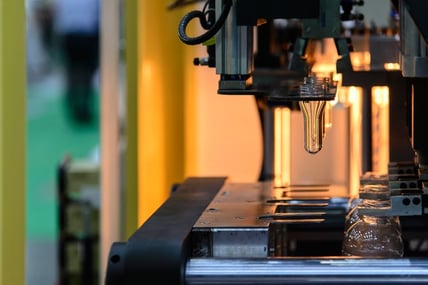
The blow molding process follows the same basic steps found in the art of glass blowing. To blow mold a part, the manufacturer inflates a parison — a heated plastic mass, usually in the shape of a tube — with air. The parison inflates until it fills the mold and conforms to its shape. In this way, the plastic is blown into its desired form. Once cooled, the newly formed plastic part is ejected from the mold.
Blow molding is especially useful for economically manufacturing one-piece, hollow objects in large volumes, as the process can quickly create uniform, thin-walled containers — perfect for small objects like bottles, as well as larger ones like storage containers and drums.
Depending on the specific application, manufacturers can use a variety of thermoplastics in blow molding to create a more customized product. Commonly worked materials include low-density polyethylene, high-density polyethylene, polyethylene terephthalate, polypropylene, and polyvinyl chloride.
Compression molding involves placing a heated plastic inside of a heated mold, then closing it to compress the plastic into the desired shape. Once cooled, the part is removed from the mold. The heating process, called curing, helps ensure that the final product will maintain its integrity and shape. Compression molding offers many unique advantages; it’s both cost-effective and highly efficient. The process is also quite versatile, allowing manufacturers to create parts that vary greatly in thickness, length, and intricacy.
Phone: +86-769-83031619
Fax: +86-769 83031656
Email: sales@reida-mold.com
Add: NO.28,YUMIN 4TH STREET, XIANGWEI, DALANG,DONGUAN,GUANGDONG
 reida customer service